My Husband Locked Me Away for His New Bride
8.7 / 10.0
Share
A year of captivity ends when the iron gate swings open, and she flees barefoot through the night, leaving the Belt Parkway behind. Returning to the Hamptons estate, she finds hundreds of candles lining the drive—a celebration for Gavin's new bride. Her torn dress hangs loose, but all she craves is one look at his face. Stepping into the glow, she enters a night that will unravel everything, exposing a truth no one saw coming.
My Husband Locked Me Away for His New Bride Summary
A year of captivity ends when the iron gate swings open, and she flees barefoot through the night, leaving the Belt Parkway behind. Returning to the Hamptons estate, she finds hundreds of candles lining the drive—a celebration for Gavin's new bride. Her torn dress hangs loose, but all she craves is one look at his face. Stepping into the glow, she enters a night that will unravel everything, exposing a truth no one saw coming.
Read More
My Husband Locked Me Away for His New Bride Chapter 1
The gate was open. I remember that most of all. After a year of locked doors, the iron gate to my own home stood wide open, and no one stopped me from walking through it.
My feet were bare. I'd lost the shoes somewhere on the Belt Parkway, hitching the last ride from a trucker who didn't ask questions. My dress — if you could call the torn thing a dress — hung off one shoulder. I didn't care. I just wanted to see Gavin's face.
The Hamptons estate blazed with light. Candles lined the drive, hundreds of them, flickering gold against the dark hedges. Music drifted out from the ballroom, string quartet, something soft and sweet. I stood on the gravel and thought, for one insane second, that they'd thrown me a welcome home party.
Then I looked through the tall windows.
Gavin stood at the altar. He wore the navy suit I'd picked out for our fifth anniversary trip to Capri. Beside him, in white lace and a veil dripping with tiny pearls, stood a woman I recognized instantly. Elodie Stewart. The girl from the foster charity gala. The one who used to cry into Gavin's shoulder about her childhood while I fetched her tissues.
Three hundred guests. Roses everywhere. And my husband was getting married.
I didn't scream. I didn't run at the glass. My body just went very still, the way it had learned to go still in that basement in Newark, when stillness was the only thing that kept me alive.
I slipped around the side of the house instead, through the service corridor I used to walk when I brought the staff coffee on cold mornings. My hands remembered the door before my mind caught up.
That's where I found Ethan.
He was kneeling on the marble floor of the back hallway, a rag in his small hand, polishing a pair of white satin heels. Elodie's heels. His hair was too long, hanging in his eyes. His wrists looked like sticks.
"Ethan," I whispered.
He flinched. Actually flinched, like I'd raised a hand to him. Then he dropped the rag and folded down onto his knees even further, forehead almost touching the floor.
"I'm sorry," he said, fast, automatic, a sentence worn smooth from repetition. "I'm sorry, I'll be good, I'll be good, please."
I knelt down and put my hand on his cheek. Something small and hard pressed against my palm through his shirt — his stuffed orca, hidden against his skin like a secret. My son looked up at me like I was one more person he had to survive.
That was the moment. Not the wedding. Not the dress. This. Something in me that had been holding on for a year, through every locked door and every bruise, just stopped.
"Laura?"
Gavin's voice, behind me. I stood up slowly.
He looked at me the way you'd look at a stain on a white tablecloth. Not shocked. Annoyed.
"You're causing a scene," he said. Calm. Reasonable. Like he was correcting a typo in a memo.
"I've been gone a year, Gavin."
"And you couldn't have called ahead? Sent someone? You just — walk in, looking like this, in front of three hundred guests —"
"Look at him." I pointed at Ethan, still frozen on his knees. "Look at what's happened to our son."
Gavin barely glanced down. "Elodie has been the only mother he's had these past months. You weren't here, Laura."
"I was chained to a radiator so you could keep breathing."
"You're not well." His voice stayed smooth, so smooth it made my skin crawl. "You've been through something traumatic. I understand that. But this — the accusations, the paranoia — it's not you."
"He's on his knees, Gavin."
"He's a well-behaved child." A muscle ticked in his jaw. "Unlike you, right now."
I didn't cry. I didn't scream. I just reached down, took Ethan's hand, and walked past my husband like he was a stranger blocking a doorway.
He let me.
---
They put me in a guest suite at the penthouse. Not our bedroom. A guest suite, third floor, with a lock on the outside I pretended not to notice.
Three days later, Dr. Victor Hale sat across from me with a legal pad and kind, empty eyes.
"Captivity does strange things to the mind," he said. "Paranoia. Attachment disruption. It's very common in survivors."
"I'm not paranoid. I watched my son apologize for existing."
He wrote something down. "Gavin mentioned you've made some troubling accusations against his fiancée."
"She's engineering my son's silence."
More writing. "We'll start with supervised visits," he said gently, like he was doing me a favor. "Once a day. Someone will need to be present."
I looked at him — at his soft hands, his tailored suit, paid for by the same account that used to pay my son's tuition — and I understood something I hadn't fully understood yet, even after Newark, even after the ballroom.
This house did not want me back. It wanted me managed.
Continue Reading
My Husband Locked Me Away for His New Bride of Contents





New Release Novels

9.2
Betrayed and left for dead by her billionaire husband, a scorned woman narrowly survives a calculated assassination attempt. Fueled by a thirst for vengeance, she enters a dangerous pact with a mysterious and powerful figure known as the Devil. In exchange for the resources to dismantle her ex-husband's empire, she must navigate a high-stakes world of wealth and deceit. This dark romance follows her ruthless journey to reclaim her life and destroy the man who ruined her.

8.3
I thought my boyfriend lost his sight saving my life, until I overheard his dark secret. His blindness and sickness are nothing but a calculated lie, a cruel trap to exploit my guilt and chain me to his side for another woman's happiness. Seeking retribution, I turn to his friend Ethan, kissing him in the shadows while my "blind" boyfriend sits nearby. But when the truth unravels, my boyfriend's desperation peaks, and he begs me to accept a shocking three-way arrangement just to keep me from leaving.

9.4
Born under a crimson moon, I was branded a curse by my pack. They feared my presence, eventually sealing my wolf and leaving me powerless. My life took a dark turn when I was forced into marriage with Drogo, a merciless rogue Alpha suffering under a divine punishment. He is a man of shadows and terror, yet I hold a dangerous secret. I possess the exact likeness of the woman from his past who caused his eternal downfall and continues to haunt him.
8.7
Slaying the beasts was not the end; they have returned, wearing the stolen faces of the youth. High above, the slain moon finds a new voice within the girl who took its life. To stop the apocalypse being rehearsed beneath the lake, a clawed mother and a daughter carrying a god must venture into the depths. This final lock is tethered to a pulse, and the human key must shatter her own soul to prevent the coming of the world's end.
8.7
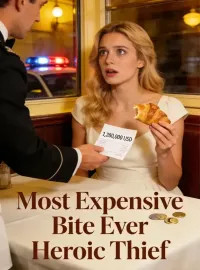
While visiting her family's luxury hotel, a wealthy heiress is slapped with a staggering $128,000 fine by an arrogant lobby manager for eating a small bread roll. Accused of bringing in outside food during her brief stay, she decides to expose the ridiculous penalty. She captures a photo of the citation and sends it directly to the corporate board, tagging her brother to demand an explanation for the absurd revenue-boosting tactics occurring under his watch at their own establishment.

8.6
A seemingly perfect relationship crumbles in an instant. When she stumbles upon a secret, entirely clean secondary operating system on her boyfriend’s phone, she uncovers a devastating truth hidden beneath the surface. The screen is filled with pages of green text messages—raw, unfiltered exchanges documenting his intense longing for another woman and his growing dissatisfaction with her. This sudden, crushing betrayal strikes a heavy blow to her heart, forcing her to confront a painful reality.